


 Translation missing: it.header.general.account
Acne Treatment for Combination Skin: How to Manage Breakouts Without Drying Out
Table of Contents
- Why Does Combination Skin Get Acne?
- Why Do Acne Treatments Make Combination Skin Feel Drier?
- Common Acne Treatment Ingredients and How They Work
- How to Choose Acne Products Without Drying Out Your Skin
- A Simple Skin Care Routine for Acne-Prone Combination Skin
- Where Do Botanical Balms Fit Into Combination Skin Care?
- Common Mistakes That Make Breakouts and Dryness Worse
- When Should You See a Dermatologist for Acne?
- Finding the Right Balance for Clearer Combination Skin
- Frequently Asked Questions
Your forehead is oily, your cheeks are dry, and somehow, you're still getting pimples. So, do you treat the acne or the dryness?
The best acne treatment for combination skin addresses both concerns. It targets clogged pores and breakouts while keeping the drier areas moisturized. Ingredients like salicylic acid, benzoyl peroxide, and adapalene can help with acne, but they may also cause dryness and irritation.
That's what makes combination skin tricky. A product that works well on your oily T-zone might leave your cheeks feeling tight or flaky.
You don't have to dry out your entire face to manage breakouts. Here's how to choose acne treatments, care for both oily and dry areas, and build a routine your skin can tolerate.
Key Takeaways
- Combination skin usually has an oily T-zone with normal or dry cheeks.
- Common acne ingredients work differently, and some can cause irritation.
- Moisturizing helps keep your skin comfortable, particularly during acne treatment.
- Using more products doesn't necessarily mean faster results.
- Botanical balms can help condition acne-prone skin, but they aren't substitutes for acne medications.
Why Does Combination Skin Get Acne?

Combination skin means different parts of your face have different oil and moisture needs. Your forehead, nose, and chin usually produce more oil, while your cheeks may feel normal, tight, or flaky.
Acne develops when excess oil and dead skin cells block pores. Bacteria called C. acnes can contribute to inflammation, which is why some clogged pores become red, swollen pimples.
Doctors call common acne acne vulgaris. Your skin type doesn't determine exactly where you'll break out. You might have blackheads around your nose but get occasional pimples along your jaw, where hormonal acne can also appear.
Having dry skin in some areas doesn't mean those areas can't develop acne, either.
Why Do Acne Treatments Make Combination Skin Feel Drier?
Acne treatments help manage breakouts, but some can leave your skin feeling tight, flaky, or irritated. This can be especially noticeable with combination skin, where your cheeks may already feel dry while your T-zone produces more oil.
Take benzoyl peroxide, for example. It helps reduce acne-causing bacteria, but dryness and irritation are possible side effects. Salicylic acid and retinoids can also dry the skin, even though they work differently.
The American Academy of Dermatology's guidance on moisturizer for acne-prone skin explains that these treatments can dry and irritate skin. Dermatologists may recommend daily moisturizing to help your skin tolerate acne medication.
Moisturizing after washing also helps hold water in your skin. If your cheeks keep feeling tight or your face stings after applying products, it may be worth checking for damaged skin barrier symptoms.
Common Acne Treatment Ingredients and How They Work

If you've looked for acne treatments, you've probably come across salicylic acid, benzoyl peroxide, and retinoids. These are established ingredients used to manage different types of acne.
But with combination skin, you also need to consider how they affect your drier areas.
Salicylic Acid for Clogged Pores
Salicylic acid is commonly used for blackheads and whiteheads because it helps remove dead skin cells that clog pores. You'll find it in nonprescription products at concentrations of 0.5% to 2%. It can be useful for an oily T-zone, although some people experience mild stinging or dryness.
Benzoyl Peroxide for Inflamed Pimples
Benzoyl peroxide works by reducing acne-causing bacteria and removing excess oil and dead skin cells. Products typically contain 2.5% to 10%, but a higher percentage doesn't always mean better results. Lower concentrations can be just as effective, with less irritation for some people.
Adapalene and Azelaic Acid for Persistent Breakouts
Adapalene is a retinoid that helps unclog pores and prevent new breakouts. In the US, 0.1% adapalene gel is available without a prescription, although it can cause dryness and peeling.
Azelaic acid is another ingredient used for acne and the dark spots pimples leave behind. It's available in nonprescription formulas at 10% strength in the US.
What About Alpha Hydroxy Acids?
You may also see alpha hydroxy acids, including glycolic acid and lactic acid, in exfoliating skincare. These ingredients help remove dead skin cells from the surface and improve uneven texture. However, using several exfoliating products can leave combination skin feeling irritated.
According to the Mayo Clinic's guide to nonprescription acne treatments, alpha hydroxy acids may help with acne and improve the appearance of acne scars, but they can also cause mild stinging, irritation, and increased sun sensitivity.
These ingredients can be useful, but not every formula suits every skin type. If your cheeks already feel tight or flaky, pay attention to how your skin responds rather than choosing a product based on strength alone.
How to Choose Acne Products Without Drying Out Your Skin
It's easy to focus on your oiliest area when shopping for skincare. After all, a shiny forehead is hard to ignore. But your cheeks need attention, too.
When comparing topical products for blemish-prone skin, consider how each formula feels across your face.
- Cleanser: Choose a mild cleanser that removes dirt and excess oil without leaving your cheeks tight.
- Acne treatment: Look at the ingredient, concentration, and type of breakout it's intended for.
- Moisturizer: Choose a texture that feels comfortable, especially on drier areas.
- Product labels: Non-comedogenic formulas are less likely to clog pores, although individual reactions vary.
- Sensitive skin: Pay attention to fragrance, essential oils, and ingredients that have irritated your skin before.
For more help choosing a moisturizer, read our guide to an acne-safe moisturizer for breakout-prone skin.
A Simple Skin Care Routine for Acne-Prone Combination Skin
You don't need several serums, creams, and spot treatments to care for combination skin. A simple routine makes it easier to notice how your skin responds. It also helps you avoid adding products whenever a new pimple appears.
Morning Routine: Cleanse, Moisturize, and Protect
Your morning routine should remove excess oil without leaving your cheeks feeling dry or tight.
- Cleanse gently. Wash with lukewarm water and a mild cleanser to remove overnight oil and buildup.
- Moisturize. Focus on areas that feel dry or tight. A lighter application may feel more comfortable on your oily T-zone.
- Be mindful of sun exposure. Protect your skin from excessive sun exposure, especially if you're using an acne treatment that increases sun sensitivity. Shade and protective clothing can help, while a suitable sunscreen offers additional protection.
Your forehead doesn't need to feel completely oil-free after cleansing. The goal is clean, comfortable skin, not a tight or stripped feeling.
Evening Routine: Care for Breakouts Without Overdoing It
By evening, your face has collected oil, sweat, and whatever else the day brought. Your nighttime routine should remove that buildup without leaving your skin uncomfortable.
- Remove makeup and sunscreen. Cleanse gently instead of repeatedly washing your face.
- Use acne medication as directed. Avoid combining potentially irritating treatments without professional guidance.
- Moisturize. Give extra attention to areas that feel dry after cleansing.
For example, a lightweight moisturizer might feel comfortable on your T-zone, while your cheeks may prefer a richer texture.
Where Do Botanical Balms Fit Into Combination Skin Care?

When your forehead gets oily but your cheeks feel dry, finding a moisturizer that feels comfortable on both areas isn't always easy.
Botanical balms are one option worth considering. Their plant oils and waxes help soften the skin and reduce moisture loss, although their richer texture may feel different on oily and dry areas.
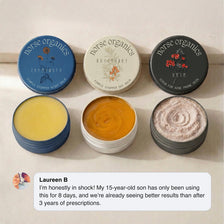
Norse Organics offers The Complete System for Acne-Prone Skin, a 3-product set featuring a daytime balm, nighttime balm, and exfoliating scrub. Each serves a different purpose, with the balms focusing on skin conditioning and the scrub on surface exfoliation.
Day Balm for Acne-Prone Skin

If you've avoided balms because your forehead gets shiny, texture is probably your biggest concern. Unlike water-based lotions, balms contain oils and waxes that can feel richer on the skin.
The glow day balm contains safflower seed oil, olive-derived squalane, beeswax, and botanical oils. Squalane helps soften the skin, while beeswax helps retain moisture.
A small amount may feel more comfortable on combination skin, particularly around your oilier T-zone.
Night Balm for Acne-Prone Skin

Your cheeks may feel especially tight after evening cleansing, even if your forehead was oily throughout the day.
The acne night balm contains safflower seed oil, borage seed oil, marigold extract, beeswax, and vitamin E. These ingredients help condition the skin and reduce moisture loss overnight.
It also contains lavender essential oil, which is worth considering if your skin is sensitive to scented botanical ingredients.
Scrub for Acne-Prone Skin

Exfoliation can remove loose dead skin cells, but it isn't something combination skin needs every day.
Norse's gentle face scrub contains rice flour, apricot kernel powder, and rose flour. These plant powders provide physical exfoliation without using chemical acids.
Because scrubbing creates friction, avoid using it on inflamed pimples, broken skin, or areas already irritated by acne treatments. Not everyone with acne-prone skin needs a physical scrub.
You can also browse Norse's skincare products for acne-prone skin to compare the available formulas.
Common Mistakes That Make Breakouts and Dryness Worse
Sometimes your skin doesn't need another product. It needs fewer things irritating it. For example, washing your forehead whenever it looks shiny might remove surface oil, but repeated cleansing can leave your cheeks uncomfortable.
Other habits can cause problems, too.
- Washing too often: Repeated cleansing can irritate skin without stopping acne.
- Skipping moisturizer: Oily areas can still become dry during acne treatment.
- Using several exfoliants: Combining acids and scrubs can increase irritation.
- Scrubbing inflamed skin: Friction can make existing pimples feel worse.
- Picking blemishes: Squeezing pimples increases the risk of dark spots and scarring.
Some oily or greasy hair products can also trigger breakouts around the forehead and temples.
If you're constantly reaching for your face wash, our guide to how often to wash your face explains why more cleansing isn't necessarily better.
When Should You See a Dermatologist for Acne?
Mild breakouts may respond to appropriate nonprescription treatments, but some acne needs professional care. If you're dealing with moderate acne, deep painful pimples, or breakouts that leave scars, a dermatologist can assess your skin and recommend treatment.
It's also worth seeking help if stubborn acne hasn't improved after two to three months of consistent care. A dermatologist may recommend prescription treatments or a combination of medications, depending on your acne type.
You should also seek advice if your current products repeatedly cause burning, peeling, or worsening irritation.
Finding the Right Balance for Clearer Combination Skin

Combination skin can be frustrating because what feels good on your cheeks may not feel right on your forehead. But caring for acne doesn't mean removing every trace of oil from your face.
A more comfortable approach is to understand your breakouts, choose suitable treatments, and make moisture part of your skincare decisions. If you're considering botanical skincare, you can read Norse Organics customer reviews to see how customers describe their experiences.
What matters is finding a routine that feels comfortable enough to maintain without constantly dealing with dryness or irritation.
Frequently Asked Questions
What is the best acne treatment for combination skin?
It depends on your acne type and how your skin responds. Salicylic acid, benzoyl peroxide, and adapalene are established options, while moisturizing can help manage treatment-related dryness.
Can combination skin be oily and dry at the same time?
Yes. Combination skin often has an oily forehead, nose, and chin with normal or dry cheeks. Different areas may need different amounts of moisture.
Can moisturizer help prevent breakouts on combination skin?
Yes, even oily skin needs moisture. A suitable non-comedogenic moisturizer can help keep combination skin from becoming dry and irritated, especially during acne treatment. However, moisturizing alone doesn't prevent breakouts or treat existing acne.
How long does it take for acne to clear?
Treating acne takes time. Nonprescription treatments may take 2 to 3 months to show noticeable results, while lingering marks and acne scars can take longer to improve. Norse Organics' acne scar balm helps moisturize and soften the skin, making it an option for caring for areas affected by past breakouts.
Should you exfoliate combination skin every day?
Daily exfoliation isn't necessary for most people. Frequent exfoliation, especially when you're already using acne medication, can increase dryness and irritation.
Are Norse Organics balms suitable for acne-prone combination skin?
Yes, Norse Organics offers botanical balms designed for acne-prone skin. Its botanical skincare set for acne-prone skin includes day and night balms that help soften and moisturize dry areas, although their richer textures may feel different on an oily T-zone.
Disclaimer: This article provides general information and should not be used as a substitute for advice, diagnosis, or treatment from a qualified healthcare professional. Skin responses vary, and a dermatologist can help you choose appropriate care for persistent, painful, or worsening acne.


