


 Translation missing: en.header.general.account
Acne System vs Single Products: Why a Full Routine Beats Spot Treatment
Table of Contents
You finally clear one pimple, then a new one shows up a few days later. So you try another product, then another, until your shelf is full and your skin still breaks out.
Here is the reason. Each single product treats just one cause of acne, so the breakouts you did not target keep coming back.
A full acne system works on every cause at once, which is why a steady routine tends to beat single products and spot treatments. This post shows you how that works, and how to pick a system that sticks.
Key Takeaways
- Acne has 4 main causes, so one product rarely clears it alone.
- An acne system treats your whole face morning and night, which helps stop new breakouts before they form.
- Spot treatments only target pimples you can already see, not the ones forming next.
- Most routines need 6 to 8 weeks to work, so consistency beats switching products.
- A routine that feels gentle is one you can stick with, which is what actually clears skin.
Why Single Products and Spot Treatments Fall Short
Single products fall short for one reason: acne is not a single problem. Acne blemishes show up in different types of acne, from whiteheads to cysts, and each one has more than one thing driving it.
Most single products treat just one of those drivers, so they clear part of the picture and leave the rest active. You fix one thing, and a new breakout shows up from a cause you did not touch.
Spot treatments have the same gap. They only treat pimples you can already see, so the American Academy of Dermatology recommends treating all acne-prone skin, not just the spots, to help prevent the next breakout. That is why one product at a time keeps you a step behind your own skin.
What Active Ingredients Fight Acne?
Most single acne products rely on one active ingredient to fight breakouts, so each works on a single cause and comes with a trade-off. These active ingredients are sold over-the-counter at pharmacies:
- Benzoyl peroxide, 2.5% to 10%, targets acne-causing bacteria, but dries skin and bleaches fabric.
- Salicylic acid, 0.5% to 2%, unclogs pores, but can sting and flake.
- Glycolic acid lifts dead skin, but causes redness and sun sensitivity.
- Azelaic acid calms redness, but can burn or itch at first.
- Retinoid products clear pores, but bring peeling, dryness, and an early breakout.
- Sulfur absorbs excess oil, but can over-dry skin and has a strong smell.
None of these clears acne on its own, since each treats just one cause. Dermatologists suggest combining ingredient types for better results, but finding the right mix takes trial and error. A gentle, ready-made system does that work for you, which is why one product at a time so often falls short.
How Does an Acne System Treat Acne at the Source?
An acne system is a set of products that work together to treat acne at its source, not just on the surface. Instead of one product, you use a few steps across the day and week.
Acne is driven by four main factors: too much oil, clogged pores, acne-causing bacteria, and inflammation. A system can target each one, so less of the problem is left active.
A good natural acne treatment does this gently. It calms the causes of breakouts and supports your skin, rather than only drying out what you can see.
Why Consistency Beats Switching Products
Here is what trips most people up after they pick a routine: they switch products too soon. Real change takes time, because skin needs weeks to heal and renew, and switching resets the clock.
The American Academy of Dermatology says to give an acne treatment time, usually 6 to 8 weeks, before you judge it. Trying something new every week can irritate your skin and cause more breakouts.
You also do not need a long regimen of toners, serums, and masks. Simple acne kits keep things easy to follow, and a routine with skin barrier repair products stays gentle so you do not quit before results show.
A few simple tips:
- Use your products every day, even on clear days, to help prevent acne before it starts.
- Give any routine 6 to 8 weeks before you judge it.
- Keep things gentle so your skin stays comfortable.
Comfortable skin is skin you keep treating, and that habit is what clears breakouts over time.
What is the Best Acne System?
The best acne system treats acne at more than one point in your day instead of relying on a single product. The Kill Acne & Redness Ritual is built this way, with a morning balm, a night balm, and a weekly scrub, and each step targets a different driver of breakouts.
It is one of our botanical acne products, formulated for acne-prone skin and gentle enough for oily skin, dry skin, and combination skin. It uses cold-pressed plant oils instead of harsh actives.
Here is how each step does its job:
|
Product |
When |
Targets |
How it helps |
|
Pimple Stopper Day Balm |
Morning |
Excess oil, daytime protection |
Thistle oil balances oil and supports your barrier, with frankincense and eucalyptus to calm and protect. |
|
Pimple Stopper Night Balm |
Night |
Bacteria, clogged pores, inflammation |
Marigold oil targets acne-causing bacteria and calms inflammation, lavender unclogs pores, and vitamin C softens dark spots and evens skin tone. |
|
Scrub for Acne Prone Skin |
2 to 3 times a week |
Dead skin, clogged pores |
Rice flour and apricot kernel lift dead skin and clear pores, so pores look smaller and balms absorb better. |
Used over a few weeks, these steps treat oil, bacteria, clogged pores, and inflammation together.
How Do You Use Kill Acne & Redness Ritual?

Using an acne system is simple, and the steps matter less than doing them every day. Start by cleansing with warm water, then gently massage your scrub over damp skin 2 to 3 times a week and rinse.
For your balms, warm a small amount between your fingers and press a thin layer over your face, avoiding the eye area. Then pat dry gently instead of rubbing.
If you wear makeup or sunscreen with SPF during the day, choose non-comedogenic, oil-free formulas and remove them fully at night. Keeping your steps gentle and steady is what lets your skin settle.
Norse Organics Acne Balms Set Results

The before and after photos and reviews come from Norse Organics users who stopped juggling single products and stuck with complete skincare rituals. You can see how their skin shifted over weeks once every cause was treated, not just the spots they could see.
Your skin can change the same way. If one product at a time keeps letting you down, a consistent, gentle system may be what finally sticks for you.
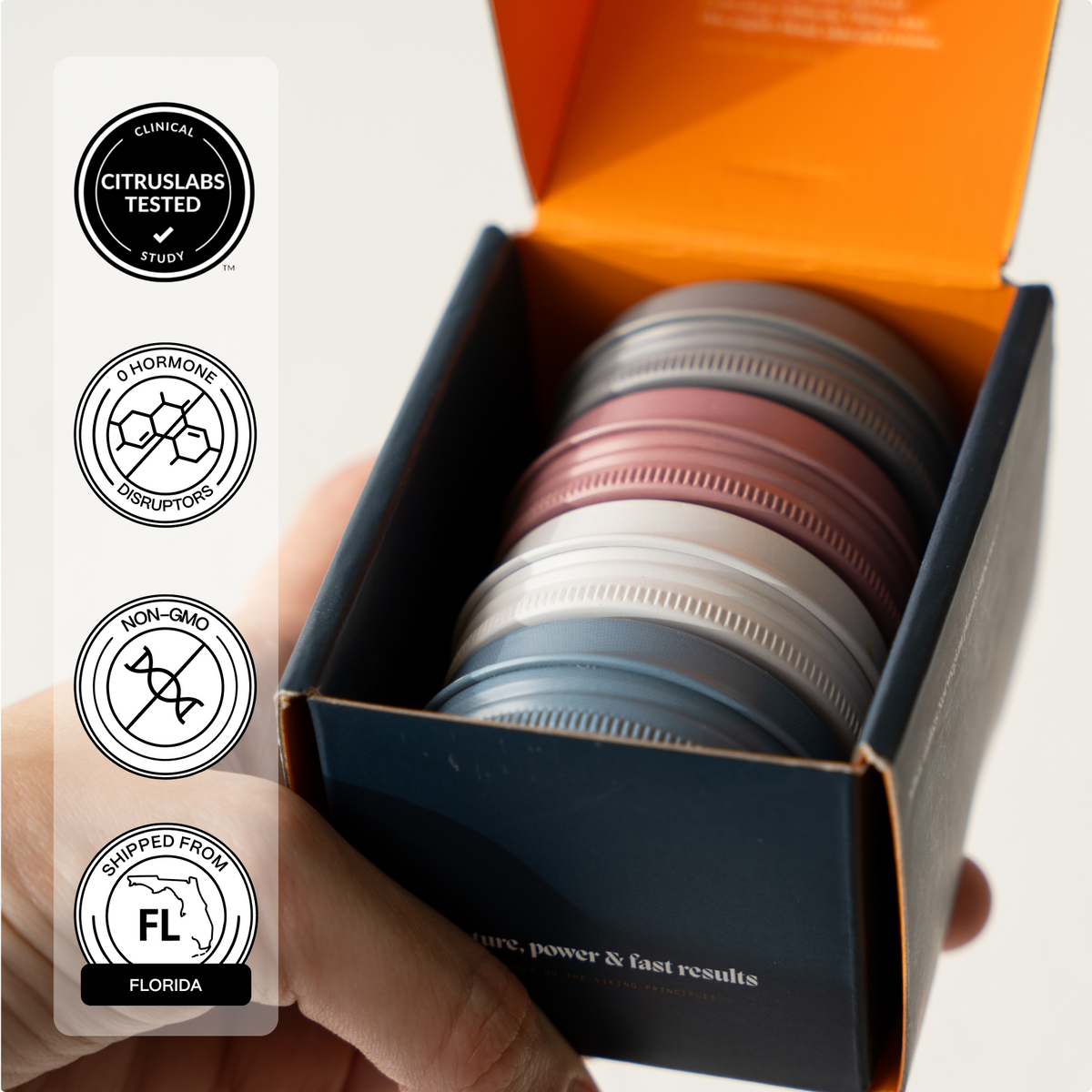
Cold-pressed Arctic botanicals and organic beeswax. Zero water, zero synthetic fragrance, no fillers. Four steps in one routine that clear breakouts and fade post-acne marks, backed by a 60-day money-back guarantee.
Shop the SystemSkincare Sets for Acne FAQs
What's the best skin care routine for acne?
The best skin care routine for acne uses a few gentle steps that work together to help rid your skin of breakouts: treat oil and protect in the morning, target bacteria at night, and exfoliate 2 to 3 times a week. It should match your skin type and stay easy to keep up. A routine you actually follow beats a perfect one you drop.
What is the 4-2-4 rule in skincare?
The 4-2-4 rule is a cleansing method: 4 minutes massaging an oil cleanser, 2 minutes with a water-based cleanser, and 4 minutes rinsing with warm then cool water. It is about thorough cleansing, not treating acne. To clear breakouts, you still need a full acne system that targets the causes, not just a wash.
How long does it take for an acne system to start working?
Most acne treatments take 6 to 8 weeks to show a real difference, and full clearing can take 3 to 4 months. You may notice less redness and smoother skin sooner. The main thing is to stay consistent and not switch products too early.
Is my acne hormonal or gut?
Your acne can be hormonal, gut-related, or both, and it often shows in where you break out. Hormonal acne tends to sit along the jaw and chin and flare around your cycle, and research on how gut health affects acne links inflammation inside the body to breakouts on your skin. If your skin does not respond to topical products alone, support from diet, sleep, and gut care can help your routine do more.
Should you moisturize oily, acne-prone skin?
Yes, even oily, acne-prone skin needs moisture. Drying your skin out can push it to make more oil, which can lead to more breakouts. A light, hydrating, non-pore-clogging moisturizer helps keep your skin barrier calm.
Can using too many acne products damage your skin?
Serious damage is rare, but piling on too many strong products can dry out and irritate your skin, which can make acne worse. Over-exfoliating or layering harsh actives often weakens your skin barrier. A simple, gentle routine usually works better than a long, aggressive one.
Can an acne system help fade acne scars and dark spots?
A full acne system can fade the appearance of acne scars, blemishes, and dark spots over time, mostly by clearing active breakouts and supporting skin renewal. Steady, gentle care fades marks better than harsh spot-treating. For more stubborn scars, a dedicated scar treatment added to your routine works best.
Disclaimer: This article is for general information only and is not medical advice. Results vary from person to person, and any customer photos reflect individual experiences, not guaranteed outcomes. If you have ongoing or severe acne, talk with a board-certified dermatologist about care that fits your skin.
