


 Translation missing: en.header.general.account
Pimple on Lip? Here's How to Get Rid of It (And What to Avoid)
Table of Contents
- Can You Get a Pimple on Your Lip?
- Is It a Lip Pimple or a Cold Sore?
- What Causes Pimples on the Lip Line?
- How to Get Rid of a Pimple on Your Lip
- What if the Bump on Your Lip Isn't Acne?
- How to Prevent Lip Pimples
- A Gentle Approach to Caring for Acne-Prone Skin
- How Long Does a Lip Pimple Take to Heal?
- When Should You See a Dermatologist?
- A Lip Pimple Doesn't Always Need a Stronger Treatment
- Frequently Asked Questions
A painful bump right on your lip line? Before you reach for a spot treatment, make sure it's actually a pimple.
A true acne pimple on your lip line forms when a hair follicle gets clogged with oil and dead skin cells. It may appear as a raised red bump or a whitehead. But not every bump on or around your lips is acne. Cold sores, milia, Fordyce spots, perioral dermatitis, and reactions to lip products can look almost identical, even though each forms in a completely different way.
And that difference matters, because what helps a pimple won’t help a cold sore or a patch of milia. Here’s how to tell these bumps apart, what causes true lip pimples, and how to care for the area without making it worse.
Key Takeaways
- True acne pimples form around the outer lip line, where hair follicles and oil glands are present. Bumps on the pink part of the lips usually have another cause.
- Cold sores aren't acne. They're caused by the herpes simplex virus and can spread through close contact.
- Warm or cold compresses can ease discomfort, but squeezing a pimple can make it worse.
- Benzoyl peroxide and salicylic acid are established acne treatments, although they may irritate sensitive skin.
- Milia, Fordyce spots, perioral dermatitis, and product reactions can look like pimples, but they form through different mechanisms and need different care.
Can You Get a Pimple on Your Lip?

Yes, but there's a difference between a pimple near your lip and one that seems to be growing directly on it. The skin around your mouth has hair follicles and oil glands, just like the rest of your face. When a follicle gets blocked, a pimple can develop along the outer lip line.
The pink part of your lips is different. It doesn't have the same hair follicles, so typical acne doesn't form there.
For example, a whitehead just above your upper lip could be acne. A bump on the pink part of your lower lip, however, may have another cause. That's why identifying the bump matters before applying any treatment.
Is It a Lip Pimple or a Cold Sore?

A lip pimple forms when a hair follicle gets clogged, while a cold sore is caused by the herpes simplex virus (HSV). Both can appear near your mouth, but they look and behave differently.
One clue is how the bump starts. Cold sores often begin with tingling, itching, or burning before small, fluid-filled blisters appear. These blisters may burst and form a scab as they heal.
A pimple usually looks like a single red bump, sometimes with a whitehead. It may feel tender when touched, but it doesn't typically develop into a cluster of blisters.
|
What to Look For |
Lip Pimple |
Cold Sore |
|
Appearance |
Red bump, sometimes with a whitehead |
Small, fluid-filled blisters, often grouped |
|
Location |
Skin around the lip line |
Lip surface or nearby skin |
|
Early symptoms |
Tenderness or swelling |
Tingling, itching, or burning |
|
Cause |
Clogged hair follicle |
Herpes simplex virus |
|
Contagious? |
No |
Yes |
|
Treatment |
Acne care when appropriate |
Antiviral treatment when needed |
Unlike lip pimples, cold sores are contagious. According to the NHS guidance on cold sores, they can spread from the first tingling sensation until the sore has completely healed.
What Causes Pimples on the Lip Line?
True lip pimples develop for the same basic reason as acne elsewhere on your face: oil and dead skin cells collect inside a hair follicle and create a blockage. Some of the triggers below, like shaving and lip products, can also cause acne-like bumps that aren’t clogged pores at all, such as irritated hair follicles or a skin reaction.
Bacteria that normally live on your skin can contribute to inflammation. That's when the clogged follicle may become swollen, red, or painful. But why does this happen so close to your mouth?
Lip Balm, Makeup, and Skin Irritation
Think about how often you apply lip balm throughout the day. Sometimes it spreads beyond your lips, especially when you use your fingers.
Certain lip products, makeup, or skincare formulas may contribute to clogged pores or irritation. Fragrance and other ingredients can also trigger an allergic reaction that looks similar to acne.
This doesn't mean every lip balm causes pimples. But if you notice bumps after switching products, pay attention to what changed.
Hormones, Sweat, and Friction
Ever notice more pimples around your period? Hormonal changes can increase excess oil production, making clogged pores more likely.
Your skin naturally produces sebum, which helps keep it moisturized. When excess sebum mixes with dead skin cells, follicles can become blocked.
Sweat, shaving, and repeated friction may contribute, too. For example, shaving above your upper lip can irritate hair follicles and leave bumps that resemble acne.
Genetics also plays a role in acne risk, including how your skin responds to hormonal changes and inflammation. But that doesn't mean your immune system is failing to fight acne.
You may have heard that the location of a breakout reveals what's happening inside your body. The acne face mapping guide explains why location alone can't identify the underlying cause.
How to Get Rid of a Pimple on Your Lip
If the bump is acne on the skin around your lips, gentle care is a good place to start.
You don't need to try every treatment in your bathroom. The lip area is sensitive, and applying too many products can leave it feeling uncomfortable.
Try a Warm or Cold Compress
A cold compress can temporarily ease pain and swelling, especially when the pimple feels tender.
Wrap something cool in a clean cloth and hold it gently against the area for about 10 to 15 minutes, removing it sooner if your skin feels uncomfortable. Never place ice directly on your skin.
A warm compress may feel soothing when a whitehead has formed. Use comfortably warm water and avoid pressing hard or trying to force the bump to drain.
Can Benzoyl Peroxide or Salicylic Acid Help?
Benzoyl peroxide and salicylic acid are commonly used in acne treatments. Benzoyl peroxide targets bacteria linked to acne, while salicylic acid helps remove dead skin cells that can block pores.
In its 2024 acne treatment guidelines, the American Academy of Dermatology reviewed available research and gave benzoyl peroxide a strong recommendation, while salicylic acid received a conditional recommendation. These findings apply to acne in general, not specifically to pimples near the lips.
Both ingredients can cause dryness, peeling, or irritation, depending on your skin's tolerance. That's worth considering around the mouth, where the skin can be particularly sensitive.
If your skin reacts easily, gentle cleansing and moisture care may be a more comfortable starting point, although they won't treat a clogged pore. If you use an acne treatment, follow its directions and keep it away from the pink part of your lips.
Don't Pop or Squeeze the Pimple
A visible whitehead can be hard to ignore. You might feel tempted to squeeze it before heading out.
But picking can worsen inflammation, damage the surrounding skin, and increase the chance of a lingering mark or scar. If you're wondering what to put on a pimple, it helps to understand which treatments are intended for acne.
Skip toothpaste, lemon juice, and undiluted tea tree oil. They can irritate sensitive skin and aren't dependable treatments for lip pimples.
What if the Bump on Your Lip Isn't Acne?
Not every white or red bump near your mouth is a pimple. These bumps can look alike but form in very different ways, from trapped keratin to a viral infection. Some are harmless, while others need a different approach.
Here’s what else you might be seeing.
|
Type of Bump |
What It Looks Like |
What Makes It Different |
|
Milia |
Tiny, firm white bumps |
Small cysts containing trapped keratin |
|
Fordyce spots |
Small white or yellow dots |
Normal, visible oil glands |
|
Canker sores |
Painful white or yellow ulcers |
Usually occur inside the mouth |
|
Perioral dermatitis |
Groups of small red bumps |
An inflammatory rash, not clogged pores, sometimes linked to steroid creams or heavy facial products |
|
Razor bumps or folliculitis |
Small red or pus-filled bumps around hairs |
Irritated or inflamed hair follicles, often after shaving |
|
Contact dermatitis |
Red, itchy, sometimes scaly bumps or rash |
A reaction to a product such as lip balm, toothpaste, or makeup |
|
Cold sores |
Small, painful blisters |
Caused by HSV and can spread through contact |
The practical difference is how you handle each one. Fordyce spots and milia contain no pus, so squeezing them won’t help and can damage your skin. Perioral dermatitis can get worse with acne treatments or steroid creams. Contact dermatitis usually settles once you stop using the product that triggered it.
If you’re unsure what you’re looking at, a dermatologist can help identify it.
How to Prevent Lip Pimples
You can't prevent pimples completely, especially when hormones are involved. But a few everyday habits may help lower your risk.
Start with the things that regularly touch your face.
- Cleanse gently. Use a mild, alcohol-free cleanser twice daily if your skin tolerates it, and wash after heavy sweating.
- Remove makeup before bed. Pay attention to lipstick or foundation left around the lip line.
- Check your lip products. Consider non-comedogenic options if certain formulas seem to contribute to breakouts.
- Keep your hands away. Try to avoid touching or picking at irritated skin.
- Clean reusable applicators. Replace old lip products when needed.
- Skip rough scrubbing. Friction can make an already tender area feel worse.
What about food? According to the American Academy of Dermatology, studies on low-glycemic diets and acne suggest that reducing high-glycemic foods may help with breakouts. However, findings are mixed, and dietary changes aren't proven to clear a pimple near your lip.
Moisture matters, too. Acne-prone skin can still feel dry, particularly after cleansing or using acne treatments. If that sounds familiar, this guide to choosing a moisturizer for breakout-prone skin explains what to consider when your skin needs moisture.
A Gentle Approach to Caring for Acne-Prone Skin
Acne treatments like benzoyl peroxide and salicylic acid can leave some skin feeling dry or flaky. That's why caring for the surrounding skin is just as important.
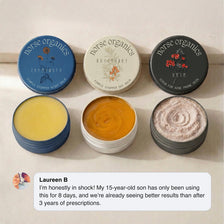
This is the approach behind Norse Organics' botanical skincare for acne-prone skin. Its formulas focus on nourishing the skin, maintaining moisture, and supporting the skin's natural barrier. Here's how each product can fit into your daily routine.
Night Balm for Acne-Prone Skin

The Acne Night Balm is a waterless botanical formula intended for evening facial care. It contains ingredients such as borage oil, calendula, sea buckthorn, and beeswax. These ingredients contribute to the formula's conditioning feel and help skin retain moisture.
If your facial skin feels dry or rough, the balm may help it feel softer and more comfortable. Apply a small amount to clean, dry facial skin before bed, following the product directions. Keep it away from the pink lip surface, open sores, and suspected cold sores.
Day Balm for Acne-Prone Skin

The Glow Day Balm is intended for daytime moisture care. Its formula includes squalane, safflower seed oil, rosehip oil, and other botanical ingredients. Squalane is widely used in moisturizers because it helps soften skin without a heavy feel.
The balm is intended to support everyday facial moisture, not replace an acne treatment. Use a thin layer on clean facial skin as directed, avoiding the lips themselves.
Patches with Arctic Herbs for Acne-Prone Skin

Sometimes, the hardest part of having a whitehead is resisting the urge to touch it. Acne Patches use hydrocolloid, a material that absorbs fluid and provides a physical cover over suitable surface blemishes. This can be useful when you keep reaching for the same spot throughout the day.
Apply a patch to clean, dry external skin according to the package directions. Don't use one on a cold sore, the pink lip surface, or an unidentified blister.
For a broader look at the available formulas, you can browse skincare for acne-prone skin.
How Long Does a Lip Pimple Take to Heal?
A small surface pimple may improve within several days to two weeks. Deeper, inflamed bumps can take longer.
The healing time depends on the type of pimple, how inflamed it is, and how much the area gets irritated.
You may notice that the swelling settles before the remaining redness fades. But don't assume a bump is stubborn acne just because it hasn't disappeared.
When Should You See a Dermatologist?
Most occasional lip pimples don't need medical treatment. Still, there are times when waiting isn't the best choice.
Contact a healthcare provider if you notice:
- Pain or swelling that keeps getting worse
- Redness spreading beyond the bump
- Fever or other signs of infection
- Repeated blisters or sores
- A bump that doesn't improve after about two weeks
- Frequent breakouts that don't respond to usual care
Seek urgent medical attention if swelling spreads quickly or you have difficulty breathing.
A dermatologist can determine if you're dealing with acne, an infection, or another skin condition. That can save you from spending weeks treating the wrong problem.
A Lip Pimple Doesn't Always Need a Stronger Treatment
A pimple near your lip can be frustrating, especially when it's painful or noticeable. But reaching for more products isn't always the answer. Sometimes, leaving the bump alone, keeping the area clean, and giving your skin time is enough.
The right approach also depends on what's causing the bump. Acne may benefit from appropriate treatment, while cold sores and other lip bumps need different care.
Beyond treating the pimple itself, keeping the surrounding skin moisturized matters. Norse Organics offers botanical formulas designed to nourish and condition facial skin. Its Complete System for Acne-Prone Skin is worth exploring if you're looking for a daily moisture-care routine alongside appropriate acne care.

Curious about how the formulas feel on real skin? Browse Norse Organics customer reviews to learn about other people's experiences. Everyone's skin responds differently, so their results may not reflect yours.
Frequently Asked Questions
How do you get rid of a pimple on your lip line?
Clean the surrounding skin gently, avoid squeezing the bump, and use a warm or cold compress for comfort. If you're considering acne medication, follow its directions and keep it away from the pink lip tissue.
What does a pimple on the lip line mean?
If it’s true acne, a hair follicle near your lip has become clogged with oil and dead skin cells. But a bump in that spot can also be a cold sore, milia, an irritated hair follicle, or a reaction to a lip product, so check how it looks and behaves before treating it.
Is it a pimple or STD on my lip?
A pimple isn't a sexually transmitted infection. Oral herpes can spread through kissing or oral sexual contact, so recurring blisters or painful sores should be assessed by a healthcare professional.
How long does a lip line pimple last?
A small surface pimple may improve within several days to two weeks, although deeper bumps can take longer. If it persists, worsens, or keeps returning, see a healthcare professional.
Can I pop a white bump on my lip?
It's better not to squeeze it. A white bump could be acne, milia, or a harmless Fordyce spot, and picking may damage your skin without addressing the cause.
Can Norse Organics balms help with dry, acne-prone skin?
Norse Organics' Day Balm and Night Balm are designed to moisturize and condition facial skin, which may help when the surrounding skin feels dry or uncomfortable. They're cosmetic skincare products, not treatments for lip pimples or cold sores.
Disclaimer: This article is for educational purposes only and doesn't replace medical advice, diagnosis, or treatment. If you have an unusual lip bump, suspected cold sore, or worsening symptoms, consult a qualified healthcare professional. Norse Organics skincare products are cosmetics and aren't intended to diagnose, treat, cure, or prevent acne, herpes, or other medical conditions.


