


 Translation missing: de.header.general.account
Pimple in Ear? Why It Hurts and How to Treat It Safely
Table of Contents
- What Causes Ear Acne and Clogged Pores?
- Where Can Ear Pimples Appear?
- Why Does a Painful Pimple in Your Ear Hurt So Much?
- Is It an Ear Canal Pimple or an Ear Infection?
- How to Treat a Pimple in Your Ear Safely
- Why You Shouldn't Pop a Pimple in Your Ear
- Choosing Gentle Skincare for Acne-Prone Skin
- When Should You See a Doctor for an Ear Pimple?
- How to Prevent Ear Pimples and Skin Irritation
- Caring for Ear Pimples Without Making Them Worse
- Frequently Asked Questions
A pimple in your ear can hurt more than you'd expect. Even a tiny bump can make wearing earbuds, touching your ear, or sleeping on one side uncomfortable.
Like facial acne, ear pimples can develop when excess oil and dead skin cells clog your pores. But not every painful bump inside your ear is acne. Sometimes, it's a boil, cyst, or ear infection that needs different treatment.
So, how can you get rid of a pimple without making things worse? Here's what causes ear pimples, how to care for them safely, and when to see a doctor.
Key Takeaways
- Ear pimples can develop when excess oil and dead skin cells build up and block your pores.
- Hormonal changes, sweat, and friction may contribute to breakouts.
- A warm compress may ease discomfort from a minor outer-ear pimple.
- Never squeeze a pimple or apply acne treatments inside your ear canal.
- Severe pain, discharge, or hearing changes need medical attention.
What Causes Ear Acne and Clogged Pores?

Ear pimples form for much the same reason as pimples on your face. Your skin has hair follicles and sebaceous glands that produce oil to keep it moisturized. When excess oil mixes with dead skin cells, it can clog a pore and lead to blackheads, whiteheads, or inflamed pimples.
And it's not just a teenage problem. According to the American Academy of Dermatology, acne affects up to 50 million Americans each year, making it the most common skin condition in the United States.
While breakouts are more noticeable on your face, they can also appear around your ears. Hormonal changes, friction from earbuds, and skin irritation may all play a part, which we'll look at next.
Hormonal Changes and Excess Oil
Hormonal changes can increase oil production, especially during puberty. If you already have oily skin or frequent facial breakouts, you may notice pimples around your ears.
But acne isn't simply caused by poor hygiene. Washing more often won't necessarily stop your pores from clogging.
Sweat, Earbuds, and Skin Irritation
Think about how often your earbuds press against your ears. Add sweat, friction, and hours of wear, and you've got a moist environment that may irritate your skin.
Repeated rubbing can contribute to acne caused by friction. Dirty earphones may also transfer debris and bacteria, although that doesn't mean every irritated bump is acne.
Where Can Ear Pimples Appear?
Pimples in the ear can develop in several places. Their location matters because a bump on your earlobe is different from one hidden inside your ear canal.
Outer Ear and Ear Cartilage
The outer ear has thin skin covering cartilage, with little cushioning underneath. That's why even a small painful pimple may hurt when touched. Sweat around the ear cartilage, headphone pressure, and repeated rubbing may also contribute to irritation.
Earlobe Pimples and Bumps Behind the Ear
Earlobe pimples may come from clogged pores, but wearing earrings can also cause irritation or allergic reactions. Behind your ear, sweat and hair products may collect against the skin. Sometimes, the bump isn't acne at all.
Pimples Inside the Ear Canal
The ear canal contains hair follicles and glands that produce protective secretions. An inflamed follicle can sometimes create a tender bump. However, the skin inside your ear canal is a sensitive area. A painful lump there may be a boil or infection rather than an ordinary pimple.
Why Does a Painful Pimple in Your Ear Hurt So Much?
Ear pimples can feel especially painful because parts of your ear have thin skin stretched over cartilage. When inflammation causes swelling, pressure on the surrounding tissue can make the area tender.
A bump beneath the surface may feel like a painful blind pimple. You might notice soreness without seeing a whitehead.
Still, severe ear discomfort shouldn't be dismissed as acne, particularly when the pain comes from inside the canal.
Is It an Ear Canal Pimple or an Ear Infection?
A painful bump inside your ear isn't always acne. Sometimes, what feels like a pimple may be a boil or an outer ear infection, also called otitis externa or swimmer's ear.
Unlike an ordinary pimple, an outer ear infection affects the ear canal. It may develop after irritation, water exposure, or a bacterial or fungal infection.
According to the NHS guidance on ear infections, ear pain, itching, discharge, and hearing changes are possible symptoms.
Here's how the symptoms may differ:
|
Symptom |
Possible ear pimple |
Possible ear infection |
|
Pain |
Often focused around one bump |
May affect more of the ear canal |
|
Appearance |
Small red bump or whitehead |
Redness, irritation, or swelling |
|
Discharge |
Sometimes pus from a bump |
Fluid or pus may drain from the ear |
|
Hearing changes |
Unusual with minor outer-ear pimples |
Possible if the ear canal becomes swollen |
These symptoms can overlap, so you can't reliably tell the difference just by looking at the bump.
How to Treat a Pimple in Your Ear Safely
For a small pimple on the visible outer ear, gentle care may help while your skin settles. The goal is to avoid further irritation, not force the bump to disappear overnight.
Try a Warm Compress
A warm compress may ease tenderness and encourage a superficial bump to drain naturally. Soak a clean cloth in comfortably warm water, wring it out, and hold it against your outer ear for 10 to 15 minutes.
It may help with discomfort, but it won't necessarily reduce inflammation or treat an infection. Don't press hard or try to drain a bump inside the canal.
Keep the Outer Ear Clean
Gently wash the visible outer ear with warm water and mild soap or a gentle cleanser. Pat it dry instead of rubbing.
Avoid inserting cotton swabs or other objects into your ear canal. If you're wondering what to put on a pimple, remember that advice for facial acne doesn't automatically apply inside your ear.
Be Careful With Acne Treatments
Benzoyl peroxide and salicylic acid are well-established acne ingredients. They can help with certain clogged pores and inflamed pimples.
However, these topical medications may cause dryness, peeling, or irritation. People with moderate acne or more severe cases may need different treatment options from a dermatologist.
Never apply acne creams, botanical oils, or spot treatments inside your ear canal. The right approach depends on what's causing the bump.
Why You Shouldn't Pop a Pimple in Your Ear
When a pimple in your ear starts hurting, squeezing it might seem like the quickest way to relieve the pressure. But doing so can make the bump even more painful.
According to the American Academy of Dermatology, popping pimples can cause scarring because squeezing may push their contents further into your skin. This can increase inflammation, make the bump more painful, and raise the risk of infection.
And because your ear is difficult to see and reach, trying to pop a bump with your fingernails or a Q-tip may also injure the surrounding skin.
The better approach is to leave it alone. If the bump is especially painful, keeps growing, or seems to need draining, have a healthcare professional examine it rather than trying to pop it yourself.
Choosing Gentle Skincare for Acne-Prone Skin
If you regularly deal with breakouts around your face, jawline, or outer ears, it's worth paying attention to how your skin responds to your skincare routine.
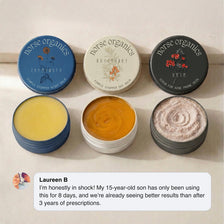
Norse Organics takes a gentle, botanical-focused approach to caring for acne-prone skin. Its formulas combine plant oils, botanical ingredients, and moisture-retaining ingredients to help keep skin feeling soft, nourished, and comfortable.
That same approach carries through its facial scrub and moisturizing balms. Each has a different purpose, from removing surface buildup to helping skin retain moisture throughout the day.
Day Balm for Acne-Prone Skin

Squalane helps soften the skin, while beeswax helps retain moisture. Together, they give the balm its conditioning feel and help keep facial skin comfortable throughout the day.
Apply a small amount to clean facial skin in the morning, following the product directions.
Night Balm for Acne-Prone Skin

If your skin feels dry or tight by the end of the day, a moisturizing balm can help keep it feeling soft and comfortable. Norse Organics' acne night balm contains safflower oil, calendula, borage oil, beeswax, and sea buckthorn extract.
The botanical oils help soften and condition dry-feeling skin, while beeswax helps retain moisture. The result is a moisturizing formula designed to leave facial skin feeling comfortable overnight.
Apply a small amount to clean, dry facial skin before bed, following the product directions.
Scrub for Acne-Prone Skin

Dead skin cells can leave your skin feeling rough or uneven. Norse Organics' gentle exfoliating scrub is designed to remove surface buildup and leave facial skin feeling smoother.
Use it gently and follow the product directions. Avoid scrubbing inflamed pimples or irritated areas, and keep the scrub away from your ear canal.
If you're looking to build a simple routine, explore the skincare collection for acne-prone skin.
When Should You See a Doctor for an Ear Pimple?
A minor outer-ear pimple may improve with gentle care. But a painful bump inside the ear canal deserves more caution.
Seek medical attention if you notice:
- Severe or worsening ear pain
- Swelling or redness spreading around the ear
- Pus, blood, or unusual discharge
- Muffled hearing or sudden hearing changes
- Fever or feeling unwell
- A lump that keeps growing or returning
If a bump hasn't improved after about a week, it's reasonable to have it checked. Don't wait that long if symptoms are worsening.
An ENT doctor can examine problems inside the ear canal. A board-certified dermatologist can assess persistent skin growths, including seborrheic keratosis or, in rare cases, basal cell carcinoma.
How to Prevent Ear Pimples and Skin Irritation
You can't prevent pimples completely, especially when hormones affect oil production. Still, small changes may help reduce irritation around your ears.
A few habits are worth keeping:
- Clean your earbuds. Follow the manufacturer's cleaning instructions.
- Wash your hair regularly. This helps remove oil and product residue near your ears.
- Clean the outer ear gently. Remove sweat without scrubbing.
- Reduce friction. Take breaks from tight headphones or headgear.
- Avoid cotton swabs. Keep them out of your ear canal.
- Choose suitable skincare. Noncomedogenic products may be less likely to clog pores.
You don't need to remove all your earwax to keep your ears clear. Earwax helps protect the canal, and overcleaning can cause irritation.
For recurring facial breakouts, choosing a moisturizer for acne-prone skin may also help keep your regular skin care comfortable.
Caring for Ear Pimples Without Making Them Worse
A pimple in your ear can be frustrating, but trying to get rid of it quickly may only make the irritation worse.
For minor outer-ear pimples, gentle cleansing and avoiding pressure may help keep the area comfortable. Norse Organics' botanical skincare products can also support everyday facial moisturizing, particularly when your skin feels dry or tight.
If the bump is inside your ear canal, getting the right diagnosis matters more than trying another skincare product.
Every person's skin responds differently. You can explore Norse Organics customer reviews to see how customers describe their experiences with the brand's skincare products.
Frequently Asked Questions
How do you get rid of a pimple in your ear?
For a small outer-ear pimple, try gentle cleansing, a warm compress, and leaving the bump alone. Avoid putting acne treatments inside the ear canal, and see a doctor if the pain worsens.
How long does it take for an inner ear pimple to go away?
A minor outer-ear pimple may improve within several days, but larger bumps can take longer than 1 to 2 weeks. A painful lump inside the canal may not be acne, so don't rely on a fixed healing timeline.
Why do I have a pimple-like thing in my ear?
Clogged pores, inflamed hair follicles, and irritation can cause acne-like bumps. Boils, cysts, and ear infections may look similar, especially inside the canal.
Why shouldn't I pop a pimple inside my ear?
Squeezing a pimple can push its contents further into your skin, increasing pain, swelling, and the risk of infection or scarring. If the bump is inside your ear canal, don't try to drain it yourself.
Can hearing aids cause ear pimples?
Hearing aids can sometimes cause friction, pressure, or skin irritation where they touch your ear. Keeping them clean and checking their fit may help reduce discomfort, but a painful or persistent bump should be examined by a healthcare professional.
Can Norse Organics balms help with ear pimples?
Norse Organics balms are made to moisturize acne-prone skin. They may be suitable for intact external skin around the ear if the product directions allow it, but they shouldn't be applied directly to an inflamed pimple, broken skin, or a suspected infection.
Avoid putting any skincare product inside your ear canal. If you have a painful bump there, a healthcare professional can help identify what's causing it.
Disclaimer: This article is for educational purposes only and doesn't replace professional medical advice, diagnosis, or treatment. Never insert skincare products into your ear canal, and seek medical care for persistent pain, discharge, hearing changes, or suspected infection.


