


 Translation missing: de.header.general.account
Rote Aknenarben loswerden: Ein vollständiger Leitfaden
Inhaltsverzeichnis
- Was sind rote Pickelnarben?
- Arten von Pickelnarben und -flecken
- Was ist die beste Methode, um rote Pickelnarben zu entfernen?
- Wie du rote Pickelflecken mit Norse Organics Acne Killer Balsamen verblassen lässt
- Wie du rote Pickelflecken und Narben verhinderst
- Wie rote Pickelflecken endlich verblassen
- Häufig gestellte Fragen zu roten Pickelnarben
Deine Haut wird klar, aber flache rote oder rosa Flecken bleiben lange nach dem Pickel bestehen. Die meisten nennen das rote Pickelnarben, und hier kommt die überraschende Wendung: Sie sind meist einfach nicht echte Narben.
Dieser Guide erklärt, was diese roten Flecken wirklich sind, wie du sie schneller verblassen lässt, und wann ein Fleck-Problem eigentlich ein Textur-Problem ist, für das du einen Profi brauchst.
Die wichtigsten Erkenntnisse
- Die meisten roten Pickelnarben sind keine echten Narben, sondern postinflammatorisches Erythem – flache rote Flecken, die von entzündeten Blutgefäßen hinterlassen werden.
- Ein schneller Glasdruck-Test unterscheidet rote Flecken, die unter Druck verblassen, von braunen Flecken und echten Narben.
- Rote Flecken verblassen normalerweise von selbst, und das Beruhigen von Entzündungen während des Schutzes deiner Haut beschleunigt den Prozess.
- Das Behandeln von aktiven Pickelschüben früh ist die beste Methode, um neue rote Flecken zu verhindern, bevor sie entstehen.
- Porige oder erhabene Narben sind Texturveränderungen, die ein Dermatologe behandelt, nicht nur ein Balsam allein.
Was sind rote Pickelnarben?
 Rote Pickelnarben sind meist flache rote oder rosa Flecken, genannt postinflammatorisches Erythem, keine echten Narben. Sie entstehen, wenn die Entzündung eines Pickels die winzigen Blutgefäße unter deiner Haut erweitert und beschädigt. Weil die Veränderung in den Blutgefäßen sitzt und nicht in den unteren Hautschichten, verblassen diese Flecken mit der Zeit.
Das bedeutet auch, dass sie flach sind. Wenn du einen Finger über einen roten Fleck führst, fühlt sich deine Haut glatt an, ohne Dellen oder Erhebungen. Echte Narben dagegen verändern die Textur deiner Haut.
Hier ist ein einfacher Weg, um das zu Hause zu überprüfen. Drücke ein klares Glas für eine Sekunde auf den Fleck. Wenn er unter dem Druck verblasst, ist es ein roter Fleck, und das Ziel ist, die Gesichtsrötung zu reduzieren, während deine Haut sich erholt. Wenn er bestehen bleibt, schaust du wahrscheinlich auf einen braunen Fleck oder eine echte Narbe.
Arten von Pickelnarben und -flecken
Nicht jeden Fleck, der nach einem Pickelschub bleibt, ist gleich, und das ist wichtig, denn jeder braucht eine andere Lösung. Die wichtigsten Arten von Post-Akne-Flecken teilen sich in zwei Gruppen: Farbveränderungen, die flach sitzen, und Texturveränderungen, die man anfühlen kann.
Dunkle Flecken: Postinflammatorische Hyperpigmentierung
Dunkle Flecken, bekannt als postinflammatorische Hyperpigmentierung, sehen braun oder tan aus statt rot. Sie entstehen, wenn ein Pickelschub deine Haut veranlasst, extra Melanin zu produzieren – den Farbstoff, der deiner Haut ihre Farbe gibt. Diese Flecken sind häufiger bei dunkleren Hauttypen, wo Pigment stärker auf Entzündungen reagiert.
Wie rote Flecken sitzen sie flach als Verfärbung statt Textur. Stetige, sanfte Pflege hilft, Post-Akne-Dunkelfle zu verblassen, Verfärbungen zu reduzieren und den Hautton mit der Zeit auszugleichen.
Atrophische Narben: Eispickel, Boxcar und Rolling
Atrophische Narben sind echte Narben, die die Haut eingedellt hinterlassen. Sie entstehen, wenn deine Haut bei der Heilung zu wenig Kollagen produziert, sodass die Oberfläche einsinkt. Es gibt drei Arten.
Eispickelnarben sind eng und reichen weit unter die Hautoberfläche. Boxcar-Narben sind breiter mit scharfen, definierten Kanten. Rolling-Narben erzeugen weiche, wellige, flache Vertiefungen über die Wangen. Alle drei verändern die Textur, also brauchen sie mehr als einen Balsam, um sich zu verbessern.
Erhabene Narben: Hypertrophisch und Keloid
Erhabene Narben sind das Gegenteil. Hier produziert deine Haut bei der Heilung zu viel Kollagen, sodass festes Narbengewebe über die Oberfläche hinaus wächst. Diese erscheinen am häufigsten auf der Brust, den Schultern und dem Kieferknochen. Hypertrophe Narben bleiben innerhalb des ursprünglichen Flecks, während Keloid-Narben über ihn hinausragen. Beide fühlen sich fest an und brauchen normalerweise einen Dermatologen, um flach zu werden.
Was ist die beste Methode, um rote Pickelnarben zu entfernen?
Die beste Methode, um rote Pickelnarben zu entfernen, ist, die Entzündung zu beruhigen, deine Haut bei der Heilung zu unterstützen und ihr Zeit zu geben. Es gibt keine schnelle Lösung über Nacht, aber du kannst die Dinge beschleunigen. Die meisten roten Flecken verblassen von selbst innerhalb weniger Monate, und einige bleiben näher an einem Jahr.
Die Entzündung zu reduzieren ist das Ziel, also hilft sanfte Pflege, während Pickel, Schrubben und Sonneneinstrahlung die Dinge in die Länge ziehen. Viele Menschen greifen zum üblichen Heimbehandlung für Pickelnarben, wie Azelainsäure, Salicylsäure, topische Retinoide oder Alpha-Hydroxysäuren wie Glykolsäure und Milchsäure. Diese wirken langsam und bringen oft Nebenwirkungen wie Trockenheit, Stechen, Peeling oder zusätzliche Sonnenempfindlichkeit mit sich, wobei Retinoide sich am härtesten auf reaktiver Haut anfühlen.
Das Problem ist, dass neue Pickelschübe immer neue Flecken hinterlassen, also ist die Behandlung aktiver Akne genauso wichtig wie die Behandlung der Flecken. Darum kann eine sanfte botanische Routine wie das Komplettes Acne Killer System 2.0 für reaktive Haut besser passen. Es beruhigt aktuelle Pickelschübe, sodass weniger neue Flecken entstehen, während es deine Hautwundheilung unterstützt.
Wie du rote Pickelflecken mit Norse Organics Acne Killer Balsamen verblassen lässt
 Rote Flecken beginnen mit Entzündung, also ist die Methode, sie zu verblassen, deine Haut zu beruhigen und neue Pickelschübe zu verhindern, die mehr hinzufügen. Das ist die Idee hinter dem Norse Organics botanischen System, das beruhigende Pflanzenöle, die keine Poren verstopfen, mit Inhaltsstoffen kombiniert, die aktive Akne bekämpfen. Jeder Teil spielt eine Rolle im gleichen Ziel: weniger Flecken und ruhigere Haut.
Der Pickelnarben-Balsam 2.0 zielt auf die Flecken ab, die bleiben, sobald ein Pickelschub abklingt. Calendula und Kamille sind lange dafür bekannt, gereizte Haut zu beruhigen, und eine Vitamin-C-Form hilft, aufzuhellen, während die Flecken verblassen.
|
Produkt |
Das tut es für rote Pickelflecken |
Beruhigende arktische Pflanzen |
|
Pickelnarben-Balsam 2.0 |
Beruhigt anhaltende Rötung und unterstützt deine Haut, während die Flecken verblassen |
Calendula, Kamille, Schafgarbe |
|
Pimple Stopper Tagesbalsam |
Hilft, tagsüber Pickelschübe zu stoppen, sodass weniger neue Flecken entstehen |
Sanddorn, Hagebutte |
|
Pimple Stopper Nachtbalsam |
Arbeitet nachts an der Entzündung hinter der Rötung |
Distel, Ringelblume |
|
Peeling für zu Akne neigende Haut |
Entfernt ein paar Mal pro Woche abgestorbene Hautzellen, um die Oberfläche zu erneuern |
Arktische Kräuter |
Als einfache Skincare-Routine für Pickelnarben angewendet, trägst du den Narben-Balsam nach dem Tagesbalsam, morgens und abends auf. Ein wenig reicht weit.
Wie du rote Pickelflecken und Narben verhinderst
Der beste rote Fleck ist derjenige, der niemals entsteht, und ein paar Gewohnheiten machen einen echten Unterschied. Da Flecken aus Entzündung kommen, bedeutet ruhigere Haut jetzt weniger Flecken später.
Hier ist, was am meisten hilft:
- Behandle Pickelschübe früh. Akne schnell zu fassen begrenzt die Entzündung, der größte Weg, um Pickelnarben und -flecken zu verhindern, und es ist am wichtigsten bei größeren Pickelschüben wie zystischer Akne, die leicht Narben hinterlässt.
- Halte deine Hände weg. Pickel zu drücken oder zu öffnen pusht Entzündung tiefer und macht Flecken und Narben viel wahrscheinlicher.
- Sei sanft. Hartes Schrubben und zu häufiges Waschen reizen deine Haut und verlangsamen die Heilung, also nimm es leicht, besonders wenn dein Hauttyp ölig oder empfindlich ist.
- Schütze dich vor Sonneneinstrahlung. UV-Licht kann Flecken dunkler machen und den Heilungsprozess verlängern, also helfen dir täglicher Schatten und ein Breitspektrum-Sonnenschutz, deine Haut zu erholen.
Nichts davon muss kompliziert sein. Kleine, stetige Gewohnheiten schützen die Haut, die du klären möchtest.
Wie rote Pickelflecken endlich verblassen
 Rote Pickelnarben zu verblassen ist weniger über ein Wunder-Produkt und mehr über ruhige, konsistente Pflege. Behandle die Pickelschübe, beruhige die Rötung, schütze deine Haut, und die Zeit tut den Rest der Arbeit.
Echte Veränderungen sind normalerweise graduell, und sie Seite an Seite zu sehen hilft. Das Foto zeigt, wie Haut sich über Wochen stetige Pflege ablagern und ausgleichen kann.
Sei geduldig mit dir selbst. Die Flecken, die du heute siehst, sind normalerweise das letzte Zeichen eines Pickelschubs, der bereits im Abklingen ist.
Wenn du auf diese Weise einkaufst, vertraust du nicht mehr auf Buzzwords und vertraust stattdessen auf den Beweis. Das ist der ganze Sinn von Clean Beauty richtig gemacht.
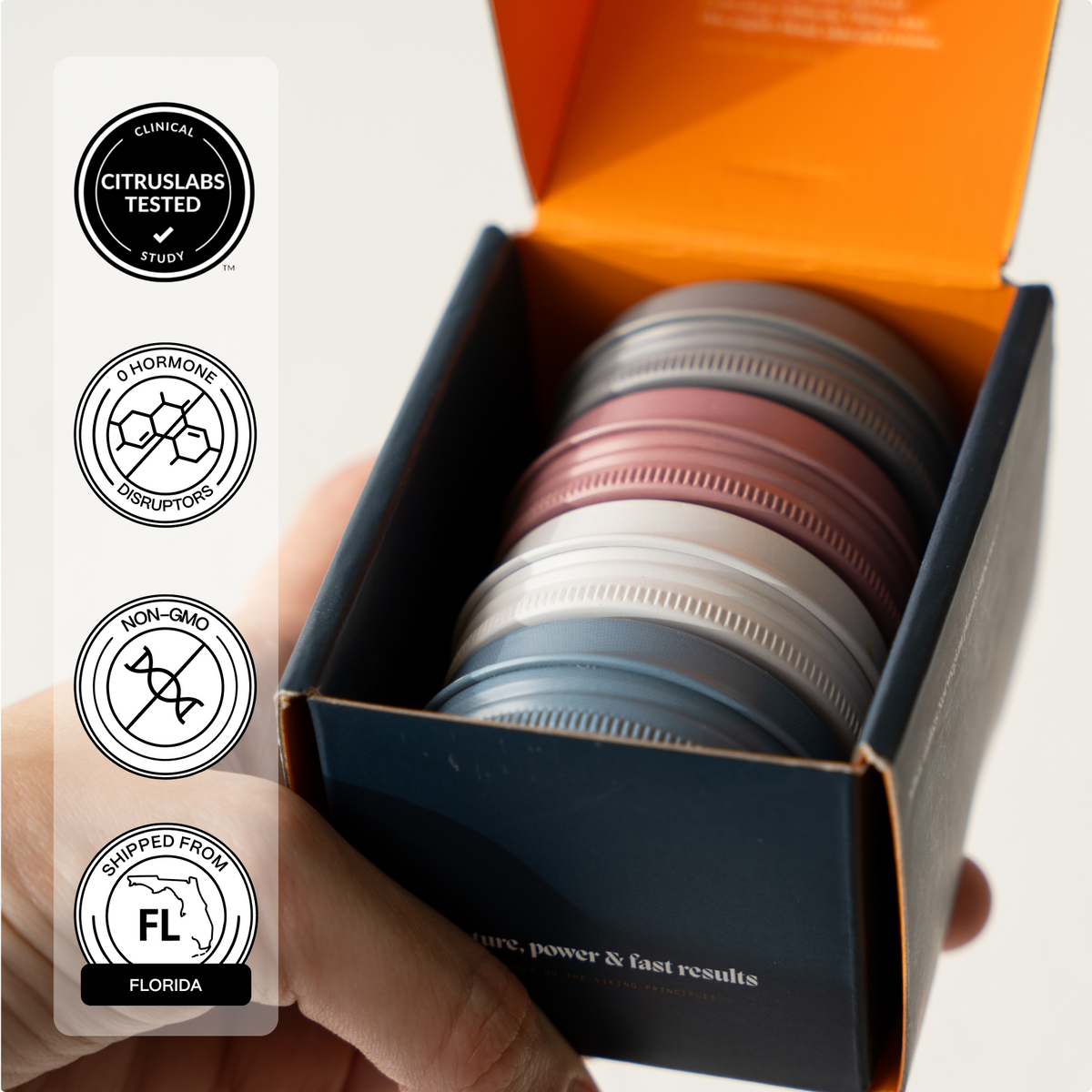
Kaltgepresste arktische Pflanzen und Bio-Bienenwachs. Kein Wasser, keine künstliche Duftstoffe, keine Filler. Vier Schritte in einer Routine, die Pickelschübe bekämpfen und Post-Akne-Flecken verblassen lassen, unterstützt durch eine 60-Tage-Geld-zurück-Garantie.
Shop the SystemHäufig gestellte Fragen zu roten Pickelnarben
Sind rote Pickelflecken das gleiche wie Pickelnarben?
Normalerweise nicht. Rote Pickelflecken sind flache Verfärbungen von entzündeten Blutgefäßen, während echte Pickelnarben Veränderungen in deiner Hautstruktur durch verlorenes oder zusätzliches Kollagen sind. Flecken verblassen mit der Zeit von selbst, aber Narben brauchen oft einen Dermatologen.
Welche Inhaltsstoffe helfen, rote Pickelflecken zu verblassen?
Beruhigende, entzündungshemmende Inhaltsstoffe helfen am meisten, da rote Flecken ein Entzündungsproblem sind. Calendula und Kamille beruhigen die Haut, Niacinamid und Azelainsäure sind häufige Auswahl, und Hyaluronsäure befeuchtet hauptsächlich. Diese verblassen Flecken statt Pickelnarben zu behandeln, die Texturveränderungen sind, die mehr als eine Creme brauchen.
Verschwindet die Rötung von Pickelnarben?
Ja, in den meisten Fällen. Rote Flecken von postinflammatorischem Erythem verblassen normalerweise von selbst innerhalb weniger Monate, manchmal näher an einem Jahr, und ruhige, sonnengeschützte Haut hilft ihnen, schneller zu verblassen. Echte Narben sind anders, da atrophische Pickelnarben Texturveränderungen sind, die nicht von selbst verschwinden.
Wann solltest du einen Dermatologen für Pickelnarben aufsuchen?
Suche einen Dermatologen auf, wenn das Problem eher Textur als Farbe ist, oder wenn Rötung nicht verblasst, egal was du versuchst. Er kann einen Behandlungsplan an deinen Narbentyp anpassen, mit Laserbehandlung für hartnäckige Rötung und chemischen Peelings, Microneedling oder Laser-Resurfacing für eingedellte Narben. Erhabene Narben können Steroid-Injektionen brauchen, während flache Flecken, die bereits verblassen, selten eines davon brauchen.
Können rote Pickelflecken zu permanenten Narben werden?
Rote Flecken selbst sind vorübergehend, aber die Pickelschübe und das Drücken dahinter können zu permanenten Narben führen. Akne früh zu behandeln und deine Hände von deiner Haut zu halten ist die beste Weise, um Pickelnarben zu verhindern, bevor sie entstehen. Die Haut zu schützen, während sie heilt, senkt das Risiko von bleibendem Post-Akne-Schaden.
Disclaimer: Dieser Artikel dient nur zu allgemeinen Informationszwecken und ist keine medizinische Beratung. Norse Organics Produkte sind nicht dazu gedacht, Krankheiten zu diagnostizieren, zu behandeln, zu heilen oder zu verhindern. Bei hartnäckigen Flecken, Narben oder anderen Hautbedenken, sprich bitte mit einem zertifizierten Dermatologen oder deinem Arzt.
